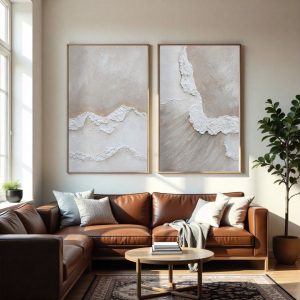
Wabi-sabi embodies the beauty of imperfection, simplicity and authenticity
It is a philosophy that invites us to view art and interior design from a different perspective. At Home Original, we’ll tell you all about it!
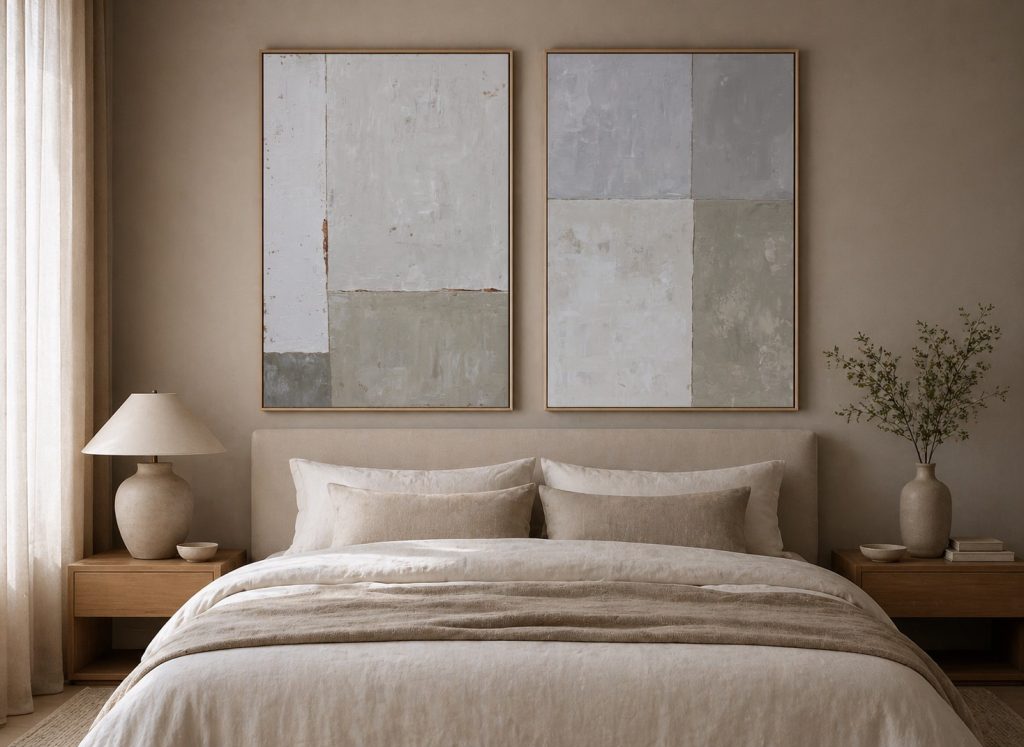
What does wabi-sabi mean?
The term wabi-sabi comes from two Japanese concepts: ‘wabi’, which refers to the beauty of simplicity, and ‘sabi’, which alludes to the beauty that emerges with the passage of time. Together, they form a philosophy that celebrates imperfection, asymmetry and the natural wear and tear of objects and spaces.
In art and design, wabi-sabi invites us to set aside exact symmetries, perfect finishes and flawless materials. Instead, it encourages us to appreciate worn textures, organic forms and the patina that only time can impart.
Wabi-sabi in art and interior design
Wabi-sabi is not just a philosophy; it is also a form of artistic expression and a trend in interior design. Original hand-painted artworks, such as the Darya Painting, with spontaneous brushstrokes and natural colours, fit perfectly with this aesthetic. They do not seek photographic perfection, but rather to convey genuine emotions and reflect the beauty of craftsmanship.
In interior design, wabi-sabi is evident in materials such as weathered wood, untreated linen and ceramics with cracks or imperfections. The idea is to create spaces that feel alive, welcoming and full of authenticity. A good example is the Cardinal Painting
5 Steps to incorporating wabi-sabi into your home
If you want to incorporate wabi-sabi into your space, you don’t need to make major changes. All it takes is a few adjustments to the way you view and choose the objects around you. Here are a few ideas:
Appreciate handmade items: opt for handcrafted pieces, such as the Clareo Azul Picture, which conveys the essence of wabi-sabi through its natural tones and organic lines.
Embrace imperfections: not everything has to be new or perfect. A piece of furniture with signs of age or a wall with an uneven texture can add warmth and character.
Use natural materials: untreated wood, cotton, stone and clay are ideal for creating a serene and authentic atmosphere.
Cut out the unnecessary: it’s not about extreme minimalism, but about keeping only what truly adds value and meaning.
Appreciate the ephemeral: a bouquet of flowers drying out, the changing light throughout the day, or the natural ageing of objects are all part of the beauty of wabi-sabi.
The beauty of imperfection
Wabi-sabi is a way of viewing life with greater calm and authenticity. Appreciating the imperfect, the natural and the handmade connects us with true beauty.
If you want to incorporate this philosophy into your home, start with small details: organic materials, objects with a history, and original hand-painted pictures that reflect the essence of wabi-sabi.
Ultimately, it is about accepting imperfection as part of life and learning